RDW on truck toll in the Netherlands: on-board unit (OBU) must always be switched on
PR Newswire
ZOETEREMEER, Netherlands, May 19, 2026
ZOETEREMEER, Netherlands, May 19, 2026 /PRNewswire/ -- The Netherlands will introduce the truck toll on 1 July 2026. Enforcement will also begin on that date. Enforcement is aimed at encouraging the correct use of the OBU and preventing violations, thereby creating a level playing field for all carriers. At the same time, discretionary leeway and the human touch are taken into account.
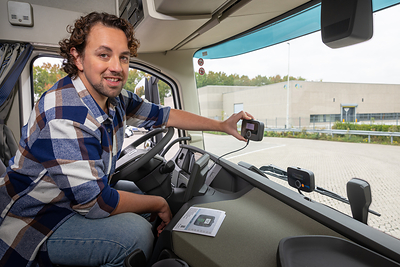
With the introduction of the truck toll, truck owners will have to pay per kilometre driven on roads where the toll applies. The kilometres driven are registered using an OBU. The OBU must always be switched on while driving in the Netherlands, even on roads exempt from the truck toll.
Preventing violations
The Netherlands helps carriers comply with the rules by providing clear information about the regulations, inspections and the responsibilities of vehicle owners and drivers. By clearly explaining what is expected and what to do in the event of a breakdown, for example, misunderstandings and fines can be avoided as much as possible.
A common misconception is that exemptions or dispensations granted in other countries also apply in the Netherlands. This is not necessarily the case. Anyone who assumes this to be the case and fails to comply with Dutch regulations, risks being fined.
How can carriers prepare?
From 1 July, every truck in vehicle categories N2 and N3 entering the Netherlands must be fitted with a working OBU. To comply with the regulations, carriers must:
- have a contract with a provider that supports the truck toll in the Netherlands;
- use an OBU that works in the Netherlands;
- link the OBU to the correct registration number;
- have the OBU switched on at all times while driving;
- in the event of a fault, report it immediately to their service provider and arrange for a working OBU to be provided within three hours.
Owners who already have a contract with a service provider are advised to check whether they can extend their contract to cover the Netherlands. If not, a separate OBU for the Netherlands will be required. The service provider is always the point of contact for any questions or technical issues relating to OBUs.
Fines for violations
From the start of the truck toll, the RDW will check whether the requirements are being met. A fine may be imposed for any violations. For the first six months (up to 1 January 2027), the rates are halved:
- No contract with a service provider for the truck toll: €800 (until 01-01-2027: €400);
- Driving with an OBU that has been switched off: €500 (until 01-01-2027 €250);
- Driving with an OBU that is not working (properly): €500 (until 01-01-2027 €250);
- Driving with an OBU that belongs to another truck: €500 (until 01-01-2027 €250).
A maximum of one fine may be issued per vehicle within a 24-hour period. If several offences are detected within that period, only the highest fine will be imposed.
How do supervision and enforcement work?
The truck toll is monitored using fixed equipment above the road and mobile equipment at the roadside. A human assessment is always carried out before a fine is imposed. The fine is sent by post to the vehicle owner. If no address is known or collection proves impossible, the vehicle may be stopped by the authorities. The fine will have to be paid immediately.
Please refer to www.trucktoll.nl for more information on rules and preparation.
Logo - https://mma.prnewswire.com/media/2945490/5890258/RDW_Logo.jpg
Photo - https://mmx.prnewswire.com/media/MS1844430/20251015-R52-0713.jpg?id=OA2638321

 View original content to download multimedia:https://www.prnewswire.com/news-releases/rdw-on-truck-toll-in-the-netherlands-on-board-unit-obu-must-always-be-switched-on-302774524.html
SOURCE RDW

