
Evolve Collision Centers is publishing consumer guidance explaining the difference between static and dynamic Advanced Driver Assistance Systems calibration after collision repair. The October resource is designed to help vehicle owners understand what these terms mean when they appear on a repair plan and why some vehicles may require a stationary calibration, a driving-based procedure, or multiple calibration steps.
Modern vehicles can use cameras, radar units, sensors, and related electronics to support features such as lane assistance, forward collision warnings, automatic emergency braking, adaptive cruise control, and parking assistance. Collision damage or repair work involving areas associated with this equipment can make calibration relevant even when the vehicle continues to operate normally.
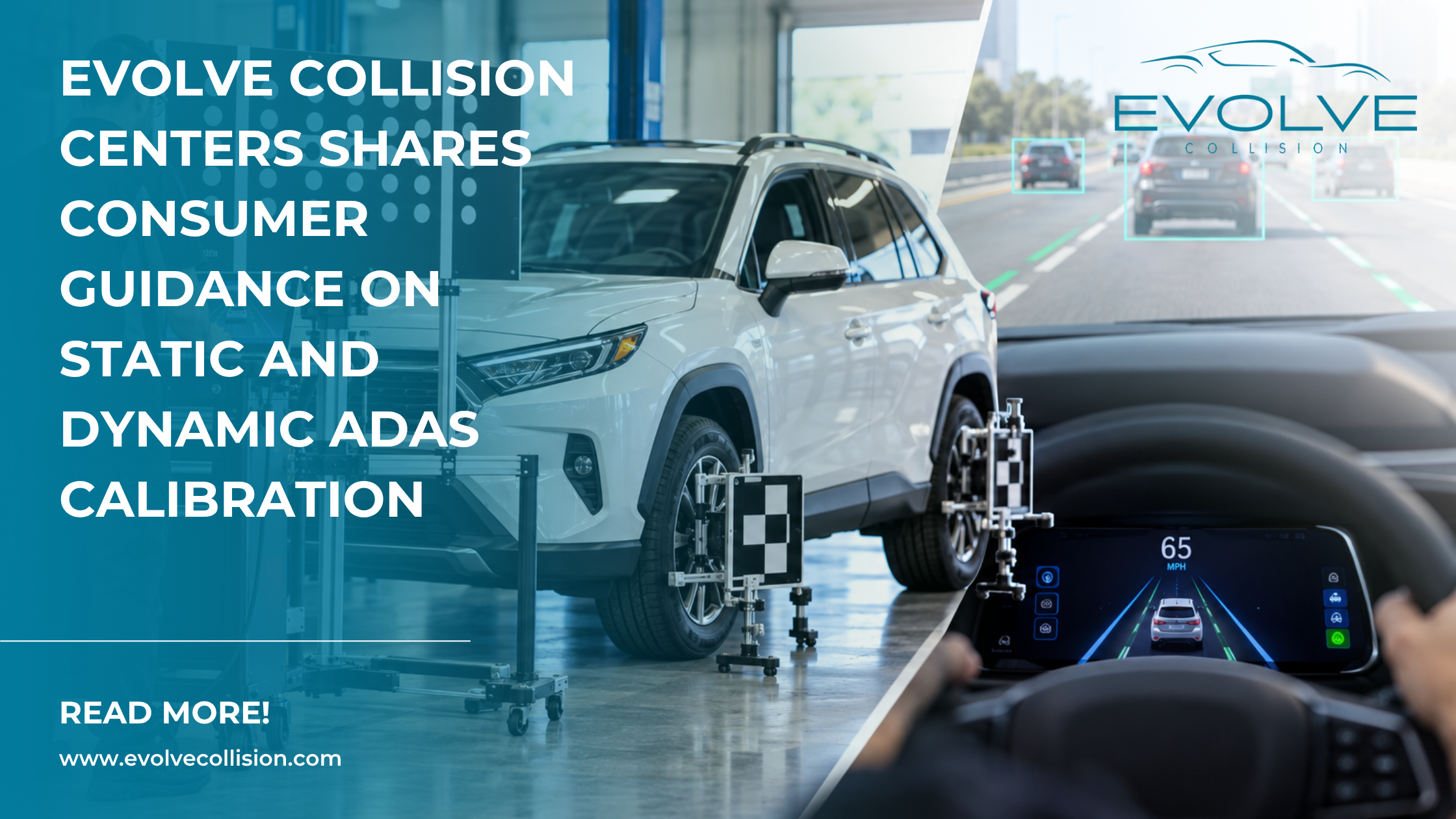
Evolve Collision Centers provides scanning and calibration services as part of collision repair planning. The new guidance separates ADAS calibration into two primary methods so drivers can better understand the terminology used during modern repairs.
Static calibration is performed while the vehicle remains stationary. Depending on the applicable procedure, technicians may use specified targets, patterns, measurements, and equipment positioned in a controlled environment. Vehicle position, target distance, floor conditions, steering position, tire condition, vehicle loading, and surrounding space can be part of the required setup.
A forward-facing camera near the windshield is one example of a component for which positioning can matter. When applicable repair work changes the camera’s relationship to the vehicle or the manufacturer specifies calibration following a particular operation, the required procedure can be used to establish the specified reference.
Dynamic calibration uses a different process. Instead of completing the procedure entirely with a stationary target setup, technicians may need to drive the vehicle under specified conditions while appropriate equipment communicates with the system.
The procedure can depend on requirements involving vehicle speed, lane markings, road conditions, traffic, driving duration, or other factors. Weather, construction, and road conditions can therefore influence whether the required environment is available for a dynamic calibration drive.
Neither method is inherently more complete than the other. Static and dynamic calibration are different procedures, and some repair situations can involve both. The applicable method is determined by the requirements associated with the vehicle and affected system.
Collision repairs involving bumpers provide one example of how ADAS work can become connected to body repair. Depending on the model, radar units, parking sensors, wiring, or other electronic components may be located in or around the bumper assembly.
When an impact or subsequent repair involves an area associated with those components, technicians can identify whether inspection, scanning, repair, or calibration procedures apply. Visible damage to an electronic component is not the only factor considered.
Windshield work can create another calibration consideration. Some vehicles use forward-facing cameras positioned near the windshield. When glass work involves a windshield associated with one of these cameras, applicable procedures can identify whether calibration is required afterward. Evolve Collision Centers also provides glass work as part of its collision-related services.
The guidance also distinguishes diagnostic scanning from calibration, two terms that can appear together on collision repair documentation.
A diagnostic scan communicates with vehicle modules and can provide information such as diagnostic trouble codes and system status. Calibration addresses specified references or alignment for applicable cameras, radar units, or other systems. One procedure does not automatically replace the other.
Repair sequence can be important as well. Physical repairs may need to be completed and relevant prerequisites confirmed before calibration takes place. For example, a radar unit can depend on its mounting position, while a camera can rely on a specified relationship to the windshield and vehicle. Damage involving a bracket, panel, glass, or mounting location may therefore need to be addressed before the associated calibration procedure is performed.
This relationship illustrates why ADAS calibration is connected to the broader collision repair process rather than functioning as an isolated electronic service.
Vehicle setup can also be part of calibration preparation. Depending on the procedure, prerequisites may involve tire pressures, vehicle loading, steering position, ride height, alignment, fuel level, or other specified conditions. The requirements are not identical across all vehicles.
Documentation provides another useful point of reference for vehicle owners. Repair records can identify applicable scanning or calibration procedures performed during the repair. Depending on the equipment and procedure, calibration documentation may include vehicle identification and information associated with the completed procedure.
Evolve Collision Centers’ collision repair services bring physical repairs and technology-related procedures into the same repair-planning process. This becomes increasingly relevant as cameras, radar units, glass, body components, and vehicle geometry interact with modern driver-assistance technology.
The October guidance gives consumers a simpler way to interpret ADAS terminology on collision repair documentation. A static calibration refers to a stationary procedure using the specified setup for the affected system. A dynamic calibration generally involves operating the vehicle under defined driving conditions. When both appear in the repair documentation, multiple calibration stages or different affected systems may be involved.
The central takeaway is that static and dynamic calibration are not competing options selected according to preference. They describe different procedures used for different vehicle systems and repair circumstances. Understanding that distinction can help drivers better follow the technology-related portion of a modern collision repair plan.
Evolve Collision Centers is located at 2560 Haverford Rd, Ardmore, PA 19003, United States and provides collision repair and related services for vehicles incorporating modern body, glass, sensor, camera, radar, and driver-assistance technologies.
###
For more information about Evolve Collision Centers, contact the company here:
Evolve Collision Centers
Butch Cantz
(267) 692-6699
bcantz@evolvecollision.com
2560 Haverford Rd, Ardmore, PA 19003
