New York, Jan. 21, 2026 (GLOBE NEWSWIRE) -- Disclaimer: This article is for informational purposes only and does not constitute medical advice. Always consult a qualified healthcare professional before starting any new supplement. These statements have not been evaluated by the Food and Drug Administration. This product is not intended to diagnose, treat, cure, or prevent any disease. Affiliate Disclosure: This article contains affiliate links. If you purchase through these links, a commission may be earned at no additional cost to you. This compensation does not influence the accuracy or integrity of the information presented.
As searches for the best collagen supplement continue to rise heading into 2026, consumers are navigating an increasingly complex marketplace of collagen powders, peptide blends, and multi-formula systems—each positioned differently based on sourcing, research backing, and intended use. What one person considers the "strongest" or "best" collagen supplement may differ significantly from another's priorities, depending on whether they're focused on bone density, joint comfort, skin health, or comprehensive structural support.
The term "best collagen supplement" itself reflects diverse consumer needs rather than a single universal answer. Some people prioritize clinical research on specific peptide formulations. Others focus on sourcing transparency (grass-fed, pasture-raised). Still others evaluate based on system complexity—whether a single-formula approach or multi-product targeting makes more sense for their goals.
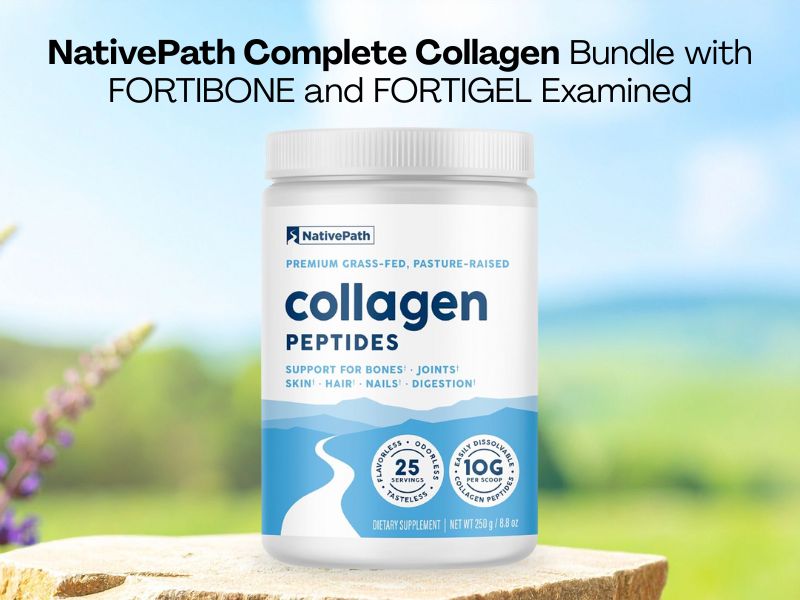
This article examines the evaluation criteria consumers use when assessing collagen supplements in 2026, explores what "strength" and "quality" mean in this category, and provides context for understanding ingredient-level research, formulation approaches, and transparency claims. One system that consumers may encounter during their research—NativePath's Complete Collagen Bundle—serves as an example of how some brands structure multi-formula approaches targeting bone health, joint support, and foundational collagen supplementation simultaneously.
What Consumers Mean When They Search for "Best Collagen Supplement" in 2026
When people search for the best collagen supplement, they're typically asking several different questions wrapped into one query:
"Which collagen supplement has the most research backing?" — Some consumers prioritize products containing clinically studied ingredients like FORTIBONE® (for bone health) or FORTIGEL® (for joint support), which have peer-reviewed research examining their effects in specific populations.
"Which collagen supplement is highest quality?" — Others focus on sourcing (grass-fed vs. conventional), manufacturing standards (GMP-certified facilities), third-party testing protocols, and purity verification.
"Which collagen supplement is strongest?" — This question often reflects confusion about potency. Some interpret "strongest" as highest peptide concentration per serving. Others mean "most bioavailable" or "most effective for my specific need."
"Which collagen supplement matches MY priorities?" — A person concerned about bone mineral density approaching menopause has different priorities than a 25-year-old focused on skin elasticity, or a 50-year-old runner experiencing joint stiffness.
The absence of a single "best collagen supplement" for all people in all situations means that evaluation becomes personal—matching product characteristics to individual priorities, life stage, specific health concerns, and budget.
How Buyers Interpret "Strongest Collagen Supplement" Claims
Consumers searching for the strongest collagen supplement often use the term to describe different ideas—such as peptide concentration, clinical research backing, or system-based formulation—rather than literal product strength. Understanding what "strength" actually means in collagen supplementation helps clarify what to look for:
Interpretation 1: Peptide Concentration Per Serving
Some products emphasize gram amounts per scoop—"10 grams of collagen peptides per serving," "20 grams per serving," etc. Higher gram counts aren't automatically better. What matters more is whether those peptides are hydrolyzed for absorption, what types of collagen they contain (I, II, III), and whether the specific peptides have research backing for the outcomes you care about.
A product with a lower gram amount may still be a better match for a specific goal if it contains peptides studied for that use case, while higher-gram generic collagen products may be positioned more for general supplementation.
Interpretation 2: Bioavailability and Molecular Size
"Strength" sometimes refers to how well the body can absorb and use the collagen peptides. Hydrolyzed collagen peptides—broken down into smaller molecular weights—are generally more bioavailable than non-hydrolyzed forms. The smaller the peptide chains, the easier they may be for the digestive system to process and for tissues to potentially utilize.
Some brands emphasize "low molecular weight peptides" or "ultra-hydrolyzed" as indicators of bioavailability. This is a legitimate quality marker, though it should be verified through manufacturing specifications rather than marketing claims alone.
Interpretation 3: Research-Backed Formulations
For evidence-focused consumers, "strongest" means "most supported by clinical research." Ingredients like FORTIBONE® and FORTIGEL® have been studied in human trials examining specific outcomes (bone mineral density changes, joint comfort in active populations). Generic collagen peptides, while potentially beneficial, typically lack this level of outcome-specific research.
A "stronger" collagen supplement, in this interpretation, is one that can point to peer-reviewed studies examining the specific peptides it contains—not just general research on collagen supplementation broadly.
Interpretation 4: System-Based vs. Single-Formula Approaches
Some consumers interpret "strongest" as "most comprehensive." Rather than one general-purpose collagen powder, they seek multi-formula systems that target different body systems simultaneously—bone health with specific peptides, joint support with different targeted peptides, and foundational collagen support for skin, hair, and connective tissue.
This approach assumes that different collagen types and peptide profiles serve different functions, and combining them provides more complete support than any single formulation could.
Is There One "Best Collagen Supplement," or Does It Depend on Use Case?
The uncomfortable answer for consumers seeking a simple recommendation: it depends entirely on what you're trying to support and what stage of life you're in.
For Bone Density Concerns (Particularly Postmenopausal Women):
For consumers prioritizing bone density support, some evaluation frameworks place more weight on whether a product includes peptides that have been clinically studied in bone-health populations (such as FORTIBONE®), alongside overall nutrition factors like calcium and vitamin D. Research on FORTIBONE® examined its effects in postmenopausal women with reduced bone mass, showing improvements in bone mineral density in the studied population when supplemented alongside calcium and vitamin D.
A general collagen powder without FORTIBONE® or similar bone-targeted peptides may still provide foundational collagen support, but it wouldn't have the same level of bone-specific research backing. For someone whose top priority is bone health, the presence or absence of research-backed bone-specific peptides becomes a key evaluation factor.
For Joint Comfort in Active Populations:
For consumers focused on joint cartilage support during physical activity, collagen supplements containing FORTIGEL® have specific research examining joint comfort and cartilage metabolism in athletes and active individuals. This peptide formulation has been studied for its effects on joint function, with some research showing positive outcomes in populations experiencing activity-related joint discomfort.
Generic collagen may provide foundational support, but targeted peptides with joint-specific research provide a different level of evidence backing for this particular concern.
For Skin, Hair, and Foundational Support:
For consumers whose priorities center on skin elasticity, hydration, hair thickness, or nail strength—cosmetic outcomes rather than deeper structural concerns like bone or joint health—a high-quality hydrolyzed collagen providing Types I and III peptides may address these needs. These are the collagen types most abundant in skin, hair, and connective tissue.
In this evaluation context, relevant product characteristics might include:
- Grass-fed sourcing
- Third-party purity testing
- Adequate peptide concentration (typically 10+ grams per serving)
- Neutral taste for easy daily use
- Price point that allows for long-term consistency
Specialized bone or joint formulas may not be necessary if concerns are primarily cosmetic rather than structural.
For Comprehensive Multi-System Approach:
Some consumers don't want to choose between bone health, joint support, and foundational collagen benefits. For this evaluation approach, a system that addresses all three simultaneously becomes relevant—accepting the added complexity and cost in exchange for comprehensive targeting.
This is where approaches like NativePath's Complete Collagen Bundle enter the evaluation framework. According to the company's published information, the bundle combines three distinct formulations: Original Grass-Fed Collagen (Types I & III), Bone Health Collagen with FORTIBONE®, and Joint Health Collagen with FORTIGEL®. The theory: different body systems benefit from different peptide profiles, so combining them provides broader support than any single formula.
Whether this multi-system approach aligns with individual priorities depends on whether the added complexity (three scoops instead of one) and higher investment match personal goals and whether consistent daily use across all three products is realistic.
What Factors Matter Most When Comparing Collagen Supplement Systems?
When consumers evaluate different collagen products—whether comparing single formulas or multi-product systems—several key factors help distinguish between options:
1. Collagen Types and Sources
Types I & III (bovine/grass-fed sources): Most abundant in skin, hair, nails, bones, tendons. These are what most collagen powders emphasize. Detailed examination of grass-fed collagen sourcing and quality standards provides context for evaluating foundational collagen formulations.
Type II (chicken cartilage or eggshell membrane sources): Found primarily in cartilage. Some products targeting joint health use Type II instead of or in addition to Types I & III.
Marine collagen (fish sources): Primarily Type I. Some evidence suggests slightly higher bioavailability than bovine sources, though research is mixed. Often more expensive.
Source quality: Grass-fed, pasture-raised bovine sources vs. conventional sources. Wild-caught vs. farmed fish for marine collagen. This affects both quality perception and price.
For someone evaluating NativePath's system, for example, all three formulas source from grass-fed, pasture-raised cattle according to the company. This consistency in sourcing addresses quality concerns across the product line.
2. Peptide Specificity: Generic vs. Clinically Studied
Not all collagen peptides are created equal. The difference between generic hydrolyzed collagen and research-backed peptides like FORTIBONE® or FORTIGEL® is significant:
Generic hydrolyzed collagen: Provides amino acids and small peptides that the body can use as building blocks. Supports general collagen synthesis. Lacks outcome-specific research.
FORTIBONE®: Specific peptide sequences clinically studied for bone mineral density effects in postmenopausal women. Contains bioactive peptides that appear to stimulate osteoblasts (bone-forming cells).
FORTIGEL®: Specific peptide formulation researched for joint cartilage support in active populations. Studies examined cartilage metabolism markers and joint comfort.
The presence or absence of these specialized peptides dramatically affects the evidence base supporting specific outcome claims. A product can be high-quality without them—but it won't have the same level of targeted research backing.
3. Manufacturing Standards and Testing
GMP-certified facilities (Good Manufacturing Practices): Pharmaceutical-grade manufacturing standards. This is baseline for quality-focused brands.
Third-party testing: Independent verification of purity (heavy metals, contaminants), potency (actual collagen content matches label), and safety (microbiological testing). Brands should be able to provide third-party testing documentation, not just claim it.
NSF Certified for Sport or similar certifications: For athletes concerned about banned substance contamination, additional certifications matter.
According to NativePath's published information, their products are manufactured in GMP-certified facilities and undergo third-party testing. These are verification checkboxes that quality-focused consumers should look for across any brand they evaluate.
4. Serving Size and Daily Cost
Consumers comparing products often look at serving size and how much collagen is provided per serving, since labels vary widely in grams per scoop and total servings per container.
Multi-formula systems like NativePath's bundle may require a larger overall budget commitment compared to single-formula products. According to the company's published pricing, multi-formula systems are often priced differently than single-formula collagen products, reflecting differences in product design and included ingredients. Whether that pricing structure aligns with individual priorities depends on whether bone and joint-specific targeting is valued over simple foundational collagen support.
5. Ease of Use and Consistency
Collagen supplementation research examines consistent daily use over weeks to months. A product you'll actually use every day is more valuable than a "perfect" product you abandon after two weeks.
Single-scoop simplicity vs. multi-scoop complexity: One formula mixed into morning coffee is easier to maintain than remembering three separate scoops. However, some people view the multi-step ritual as reinforcing commitment to their health routine.
Taste and mixability: Truly flavorless, easily dissolvable peptides matter for long-term adherence. Clumpy or off-tasting products get abandoned.
Travel-friendliness: Single-serving packets vs. bulk tubs. If you travel frequently, packaging convenience affects consistency.
6. Return Policies and Trial Periods
Because individual responses and routines vary, many consumers factor in adherence and tolerance when evaluating whether a collagen product fits their preferences and lifestyle. Money-back guarantees reduce the risk of trying products that may not align with individual needs.
According to NativePath's published policy, the company offers a 365-day money-back guarantee on unopened products and one opened product of each type from the most recent order. This extended trial period allows for longer-term evaluation than typical 30-60 day guarantees, which matters given that collagen research typically examines multi-month timelines.
Understanding the Research Behind FORTIBONE® and FORTIGEL®
Since these specialized peptides appear in discussions of research-backed collagen supplements, understanding what the actual studies show—and don't show—helps consumers evaluate whether this level of specificity matters for their goals.
FORTIBONE® Bone Health Research
The primary research on FORTIBONE® examined postmenopausal women with reduced bone mass (osteopenia). In a 12-month study, participants who supplemented with 5 grams of FORTIBONE® daily alongside calcium and vitamin D showed statistically significant improvements in bone mineral density compared to the control group receiving only calcium and vitamin D.
What this means: For postmenopausal women specifically concerned about bone density, there is peer-reviewed evidence that this particular collagen peptide formulation—when combined with adequate calcium and vitamin D—may support bone health beyond what calcium and vitamin D provide alone.
What this doesn't mean: It doesn't mean FORTIBONE® works for everyone, guarantees bone density improvements, or replaces medical treatment for osteoporosis. The research examined a specific population (postmenopausal women with reduced bone mass) over a specific timeframe (12 months) with specific co-supplementation (calcium + vitamin D).
Younger adults without bone concerns, men, or people not supplementing adequately with calcium and vitamin D might not experience the same outcomes demonstrated in the research population.
FORTIGEL® Joint Health Research
Research on FORTIGEL® has examined athletes and physically active individuals experiencing activity-related joint discomfort. Studies looked at markers of cartilage metabolism and self-reported joint comfort during and after physical activity.
What this means: For active populations noticing joint stiffness or discomfort during exercise, there is clinical research suggesting that this specific collagen peptide formulation may support joint comfort and cartilage health.
What this doesn't mean: It doesn't mean FORTIGEL® treats arthritis, repairs damaged cartilage in degenerative joint conditions, or works for everyone with joint concerns. The research focused on physically active people, not necessarily those with diagnosed joint diseases.
The Ingredient vs. Product Distinction
This is ingredient-level research. NativePath's Complete Collagen Bundle as a combined three-formula system has not been clinically studied as a product. When evaluating research claims, always ask: "Was the exact product I'm considering studied, or are these studies on individual ingredients that happen to be in the product?"
Both scenarios provide value, but ingredient research is a weaker evidence level than finished-product research. That said, most collagen supplements on the market have zero clinical research—neither ingredient-level nor product-level. The presence of researched ingredients like FORTIBONE® and FORTIGEL® represents a step above generic formulations, even if the finished bundle hasn't been studied as a complete system.
One Example System: NativePath Complete Collagen Bundle
Consumers researching multi-formula collagen approaches may encounter NativePath's Complete Collagen Bundle as one option within this category. According to publicly available information from the company, the bundle combines three distinct collagen formulations designed to address different aspects of collagen support:
Original Grass-Fed Collagen (Types I & III)
This formula provides 10 grams of hydrolyzed collagen peptides per serving, sourced from grass-fed, pasture-raised cattle. Types I and III collagen are the forms most abundant in skin, hair, nails, tendons, ligaments, and digestive tract lining.
According to the company, this serves as foundational collagen support—the baseline formula that addresses general collagen needs across multiple body systems without targeting any specific outcome area. Previous analysis of NativePath's grass-fed collagen peptides examined the sourcing, quality standards, and formulation approach of this foundational component.
Bone Health Collagen with FORTIBONE®
This specialized formula includes the FORTIBONE® bioactive collagen peptides discussed above—the ingredient clinically studied for bone mineral density support in postmenopausal women. According to the company's website, each serving provides the proprietary FORTIBONE® peptide blend designed to support bone-forming cell activity and healthy bone remodeling.
The company positions this as the bone-specific component of the system, targeting concerns that become more relevant for many people approaching or past menopause, or anyone with bone density concerns.
Joint Health Collagen with FORTIGEL®
The third formula focuses on cartilage and joint support, featuring FORTIGEL® peptides—the ingredient researched for joint comfort and cartilage metabolism in active populations. According to NativePath, this formula addresses the cartilage that cushions joints during movement and may support joint function in physically active individuals.
The System Rationale
According to the company's positioning, the three-formula approach reflects the idea that different collagen peptides serve different functions, and combining all three into a single product would either require impractically large serving sizes or would dilute the amounts of each specialized peptide below clinically relevant levels.
By separating the formulations, NativePath states that each can deliver meaningful amounts of its respective specialized ingredient while consumers can combine all three if they want comprehensive multi-system support—or use only the formulas that match their specific priorities.
The suggested usage, per the company, involves combining one scoop of each formula daily, typically added to a morning beverage.
Who This Type of System Might Align With
Rather than recommending this specific product, it's more useful to describe the type of person for whom a multi-formula collagen system—whether NativePath's or a similar approach from another brand—might make sense:
This Approach May Align Well With People Who:
Are in life stages where bone density is becoming a priority concern: Perimenopausal, menopausal, or post-menopausal individuals who want proactive bone support backed by clinical research, not just general collagen supplementation.
Experience joint discomfort during physical activity: Active adults who notice stiffness or discomfort during exercise, hiking, running, or other activities and want targeted cartilage support beyond foundational collagen.
Want research-backed targeting, not just generic supplementation: People who value the ability to point to specific clinical studies on the peptides they're consuming, rather than assuming all collagen is equally effective for all outcomes.
Prefer comprehensive approaches over minimalist routines: Individuals who view their supplement regimen as a structured health system and don't mind the complexity of multiple daily scoops if it means addressing multiple concerns simultaneously.
Have tried basic collagen without achieving desired outcomes: People who supplemented with generic collagen for skin/hair benefits but didn't see changes in joint comfort or aren't confident about bone health support may want more targeted formulations.
Other Approaches May Be Preferable For People Who:
Value simplicity above all else: If adding three different scoops to your morning routine feels overwhelming, a single high-quality collagen powder—even without specialized peptides—will serve you better than a complex system you won't use consistently.
Are younger adults without specific bone or joint concerns: If you're in your twenties or early thirties with no bone density or joint issues, foundational Types I & III collagen for skin, hair, and general connective tissue support may be entirely sufficient. Specialized bone and joint formulas are designed around age-related changes that may not yet be relevant.
Operate on a tight supplement budget: Multi-formula systems are premium-priced by nature. For people who need to prioritize supplement spending, a basic high-quality collagen at $30-40 per month provides good value. Spending $80-100+ per month on a three-formula system may not align with budget realities, even if the targeting is theoretically superior.
Have difficulty maintaining daily supplement routines: Collagen research examines consistent daily use over months. If you struggle with supplement adherence, starting with one simple formula you'll actually remember to take beats a comprehensive system that sits unused in your cabinet.
Don't consume adequate calcium and vitamin D: The FORTIBONE® bone health research examined collagen peptides in combination with calcium and vitamin D supplementation. If your diet and supplementation don't provide adequate baseline levels of these nutrients, the bone-specific peptides may not deliver the research-supported outcomes. Addressing foundational nutrition gaps matters before investing in specialized formulations.
Questions to Ask Yourself
Before choosing any collagen supplement—whether a simple single-formula option or a complex multi-product system—consider:
- What specific outcomes matter most to me right now? (Skin appearance, joint comfort, bone density, hair thickness, nail strength, digestive support?)
- Am I in a life stage where bone density or joint health is becoming a concern?
- Will I realistically use multiple formulas every single day for months?
- How does the investment in specialized, research-backed peptides compare to the value I place on the specific outcomes they target?
- Have I discussed collagen supplementation with my healthcare provider, especially if I have existing health conditions or take medications?
- If bone health is a priority, am I also getting adequate calcium, vitamin D, and weight-bearing exercise?
- If joint health is a priority, am I also addressing other factors like maintaining healthy body weight, proper exercise form, and activity modification?
Your honest answers to these questions will point you toward whether a simple foundational collagen, a multi-formula system, or something in between makes sense for your individual situation.
Quality Markers Consumers Should Look For in Any Collagen Product
Regardless of whether you choose a single-formula or multi-formula approach, certain quality indicators help distinguish between products:
1. Sourcing Transparency
Reputable brands specify where their collagen comes from:
- Bovine collagen: Grass-fed, pasture-raised vs. conventional
- Marine collagen: Wild-caught vs. farmed, specific fish species
- Country of origin: Where the source animals are raised
Vague language like "premium quality collagen" without sourcing specifics is a red flag.
2. Hydrolyzation Verification
"Hydrolyzed collagen peptides" should be standard, not a premium feature. Collagen that hasn't been enzymatically broken down into smaller peptides is poorly absorbed. If a product doesn't explicitly state "hydrolyzed" or "collagen peptides," ask why.
3. Third-Party Testing Documentation
Brands should be able to provide:
- Certificate of Analysis (CoA) from independent labs
- Testing for heavy metals (lead, mercury, cadmium, arsenic)
- Microbiological testing (absence of harmful bacteria)
- Verification that collagen content matches label claims
If a brand mentions "third-party tested" but can't produce documentation, that's marketing language, not verification.
4. GMP Certification
Manufacturing in GMP-certified (Good Manufacturing Practices) facilities is baseline for quality supplements. This ensures proper handling, storage, contamination prevention, and batch consistency.
If a brand doesn't mention GMP certification, that's concerning. If they mention it prominently, that's baseline—not a special achievement.
5. Clear Serving Size and Peptide Amount
Labels should clearly state:
- Serving size (typically one scoop = X grams)
- Amount of collagen peptides per serving (typically 10-20 grams)
- Types of collagen included (I, II, III, etc.)
If the label doesn't specify how many grams of collagen you're getting, or hides it in a "proprietary blend," that's a transparency issue.
6. Realistic Claims and Appropriate Disclaimers
Quality brands:
- Use language like "supports," "may help," "associated with" rather than "cures," "treats," "guarantees"
- Include appropriate FDA disclaimers about supplements
- Attribute research to ingredient studies rather than making unsupported product claims
- Are transparent about what's been studied vs. what hasn't
Brands making dramatic cure claims or guaranteeing specific outcomes are either operating outside regulatory boundaries or selling something other than a legitimate dietary supplement.
Pricing Context and Availability
According to the company, NativePath's Complete Collagen Bundle is available on the official website. Pricing, package options, and any current promotional offers are set by the company and may change without advance notice. According to the company, multiple package configurations may be available. Consumers should review the current terms directly on the official website.
According to NativePath's return policy, orders are backed by a 365-day money-back guarantee on unopened products and one opened product of each type from the most recent order. Original shipping costs are non-refundable according to the published terms, and return shipping is the customer's responsibility. Full guarantee terms, conditions, return procedures, and any exclusions are available on the official NativePath website.
Consumers are encouraged to review the most current pricing, package configurations, and return policy details directly on the company's website before making purchasing decisions, as these details are subject to change and may vary from information published at earlier dates.
Timeline Expectations for Collagen Supplementation
Research on collagen peptides typically examines consistent daily use over extended periods, often months rather than weeks. Individual experiences vary widely based on baseline health status, total diet, activity level, and the specific outcomes being evaluated, and no outcomes or timelines can be guaranteed. When studies are referenced, readers should note the timeframe and population studied (for example, bone health studies often run many months), which may not generalize to all users.
The FORTIBONE® bone health research, for example, examined outcomes at 12 months of daily supplementation. The FORTIGEL® joint research typically looked at timelines of 8-12 weeks or longer.
Realistic expectations matter for sustainable supplementation. Collagen is not a quick-fix solution. When studies are referenced, readers should note that many examine consistent daily use over multi-week or multi-month timeframes, and findings may not generalize to all users.
Safety Considerations and Who Should Consult Healthcare Providers
Collagen supplements are generally well-tolerated when used as directed by healthy adults. However, several populations should discuss supplementation with healthcare providers before starting:
People with beef allergies or sensitivities: Bovine-derived collagen may not be appropriate. Marine collagen or eggshell membrane collagen might be alternatives, but allergies to fish or eggs would similarly contraindicate those sources.
People taking medications that affect bone metabolism: If you're being treated for osteoporosis or taking medications that affect calcium absorption or bone remodeling, discuss collagen supplementation with your physician to ensure it aligns with your treatment plan.
People with kidney disease: Collagen is protein, and protein intake requires consideration in kidney disease management. Collagen supplements add to daily protein load.
People with digestive conditions: While collagen is often marketed as supporting digestive health, individuals with specific digestive disorders should verify with healthcare providers that collagen supplementation is appropriate for their condition.
Pregnant or nursing individuals: Safety data for collagen supplementation during pregnancy and lactation is limited. Conservative medical advice typically recommends avoiding unnecessary supplements during these periods unless specifically recommended by an obstetrician.
People scheduled for surgery: As with many supplements, discontinuing collagen in the weeks before scheduled surgery is often recommended, as some supplements can affect blood clotting or interact with anesthesia.
This is not an exhaustive list. The underlying principle: if you have any diagnosed health condition, take any prescription medications, or are in any special health circumstance, discuss supplement additions with your healthcare provider. This applies to collagen and all other dietary supplements.
Contact Information
For questions about NativePath products, ingredient sourcing, clinical research references, or current offerings, according to the company's website, customer support is available:
Phone: 1-800-819-2993
Hours: Monday through Friday, 8:00 AM – 5:00 PM Central Time
Email: cs@nativepath.com
Address: 1395 Brickell Ave, Suite 800, Miami, FL 33131
Current product information, package options, and availability details can be found on the official NativePath website.
Final Evaluation Framework
There is no single best collagen supplement that universally fits every person's needs, priorities, life stage, and budget. Product selection depends entirely on matching product characteristics to individual circumstances:
For consumers whose primary concern is bone mineral density (particularly postmenopausal women), evaluation frameworks may place more weight on whether a product includes clinically studied bone-specific peptides like FORTIBONE®—combined with adequate calcium and vitamin D—rather than generic collagen alone.
For consumers focused on joint comfort during physical activity, formulations containing FORTIGEL® or similar joint-researched peptides provide targeted support backed by studies in active populations.
For consumers seeking foundational support for skin, hair, and general connective tissue health, a high-quality hydrolyzed collagen powder providing Types I & III peptides from grass-fed sources may address these needs without requiring specialized bone or joint formulations.
For consumers who want comprehensive multi-system support and value research-backed targeting over simplicity, a multi-formula approach like NativePath's Complete Collagen Bundle—or similar systems from other brands—addresses bone, joint, and foundational collagen needs simultaneously.
The evaluation process requires honest self-assessment about priorities, consistency capabilities, and budget realities. A product that isn't used consistently delivers zero benefit. A simpler product taken every day for months provides more value than a complex system that sits unused.
Quality markers—grass-fed sourcing, third-party testing, GMP manufacturing, appropriate disclaimers, research attribution—help distinguish legitimate products from questionable ones regardless of formulation complexity.
And critically: collagen supplementation complements, but does not replace, foundational health practices. Adequate nutrition (including calcium, vitamin D, vitamin C, and protein), regular weight-bearing exercise, adequate sleep, stress management, and appropriate medical care remain the foundation of bone health, joint function, and skin quality. Supplements enhance this foundation; they don't substitute for it.
For anyone serious about collagen supplementation, the first step is having an honest conversation with a healthcare provider about whether supplementation makes sense for individual health situations, what outcomes are realistic to expect, and how collagen fits into broader health strategy.
Current information about NativePath's Complete Collagen Bundle, ingredient details, and availability can be found on the company's official website.
Disclaimers
FDA Health Disclaimer: These statements have not been evaluated by the Food and Drug Administration. This product is not intended to diagnose, treat, cure, or prevent any disease. Always consult your physician before starting any new supplement, especially if you have existing health conditions, take medications, or are pregnant or nursing.
Professional Medical Disclaimer: This article is educational and does not constitute medical advice. Collagen supplements are dietary supplements, not medications. If you are currently taking medications, have existing health conditions, are pregnant or nursing, or are considering any major changes to your health regimen, consult your physician before starting any new supplement. Do not change, adjust, or discontinue any medications or prescribed treatments without your physician's guidance and approval.
Results May Vary: Individual results will vary based on factors including age, baseline health condition, dietary habits, physical activity level, consistency of supplementation, genetic factors, current medications, hormonal status, and other individual variables. While some customers report improvements in joint comfort, skin appearance, nail strength, or hair thickness, results are not guaranteed. Customer reviews represent individual experiences and should not be interpreted as typical outcomes.
Ingredient Research Disclaimer: Clinical research on FORTIBONE® and FORTIGEL® examined these specific ingredients individually in specific study populations (primarily postmenopausal women for FORTIBONE® bone health research, and active adults for FORTIGEL® joint research). NativePath's Complete Collagen Bundle as a combined three-formula system has not been clinically studied. The research cited reflects ingredient-level findings and does not guarantee specific outcomes for any individual using NativePath's products.
Affiliate Disclosure: This article contains affiliate links. If you purchase through these links, a commission may be earned at no additional cost to you. This compensation does not influence the accuracy, neutrality, or integrity of the information presented. All opinions and descriptions are based on published research and publicly available information from the manufacturer.
Pricing Disclaimer: Pricing information, package options, and promotional details are subject to change without notice. All information was based on publicly available details at the time of publication (January 2026). Always verify current pricing, package configurations, and promotional terms on the official NativePath website before making purchasing decisions.
Quality and Sourcing Disclaimer: Quality standards, third-party testing protocols, sourcing claims (grass-fed, pasture-raised), and manufacturing certifications (GMP-certified facilities) are based on information published by NativePath on their official website and product materials. The publisher of this article has not independently verified these quality claims and relies on the manufacturer's published information.
Guarantee Terms Disclaimer: The 365-day money-back guarantee referenced is based on NativePath's published return policy available on their website. According to the published terms, the guarantee applies to unopened products and one opened product of each type from the most recent order. Original shipping costs are non-refundable, and return shipping is the customer's responsibility. Full guarantee terms, conditions, return procedures, and any exclusions should be reviewed on the official NativePath website before purchasing.
Publisher Responsibility: The publisher of this article has made every effort to ensure accuracy at the time of publication based on publicly available information from NativePath and published research on collagen supplementation. We do not accept responsibility for errors, omissions, changes to product formulations, pricing changes, or outcomes resulting from the use of the information provided. Readers are encouraged to verify all details directly with NativePath and their healthcare provider before making supplement decisions.
Third-Party Research Disclaimer: Research cited regarding FORTIBONE® and FORTIGEL® is based on published scientific studies examining these specific trademarked ingredients. These studies were conducted by or sponsored by the ingredient manufacturers (GELITA AG). While peer-reviewed research provides valuable information about ingredient mechanisms and potential effects, studies sponsored by ingredient manufacturers should be evaluated with awareness of potential conflicts of interest. Independent replication of findings strengthens research reliability.
This article is for informational and educational purposes only. For current product details, package options, and to make purchases, visit the official NativePath website. For medical advice regarding collagen supplementation and your individual health needs, consult a qualified healthcare professional.

Phone: 1-800-819-2993 Hours: Monday through Friday, 8:00 AM – 5:00 PM Central Time Email: cs@nativepath.com